FARM FORCE
Farm Force brings conservation professionals, students, farmers, and volunteers together to get conservation work done—and build the skilled agrarian workforce needed to support working lands.
Through hands-on farm work brigades, technical bootcamps, professional development, and a growing peer network, participants gain practical experience while helping farmers implement projects that improve soil, water, habitat, climate resilience, and farm viability.
Farm Force began as a partnership between Vermont and the U.S. Virgin Islands and is now growing into a broader network for people and Conservation Districts who want to learn conservation by doing it.
Learn the History of Farm Force here.
Hands-On Work Brigades
Farm Force crews provide the practical labor, skills, and coordination needed to move conservation projects from plans on paper to completed work on the ground. This includes strengthening locally rooted food systems by helping farmers implement the practices funded through state and federal conservation contracts.
- Planting riparian buffers, hedgerows, orchards, and agroforestry systems
- Harvesting and processing locally important foods, including hickory nuts in Vermont and mangoes in the U.S. Virgin Islands
- Helping farmers implement practices funded through NRCS conservation contracts
- Installing and improving grazing infrastructure, livestock fencing, and farm water systems
- Completing soil-health, water-quality, and climate-resilience projects
- Establishing pollinator and wildlife habitat
- Managing invasive plants using nonchemical and biological approaches
- Tackling other labor-intensive projects that help farmers farm
These brigades help move projects from plans on paper to conservation on the ground.
Technical Training and Bootcamps
Farm Force offers intensive, field-based training for conservation district staff, emerging professionals, students, and partner organizations.
Training focuses on:
- Comprehensive conservation planning: Developing whole-farm plans that connect farmers’ goals with soil, water, crops, livestock, trees, habitat, infrastructure, and farm viability
- Agroecological design: Understanding the farm as an interconnected ecological and economic system rather than addressing each conservation practice in isolation
- Practical agricultural engineering: Building the capacity needed to help small-scale and regenerative farms move NRCS contracts from planning through implementation
- Field surveying and layout: Surveying fields for contour and measuring elevations and slopes for animal trails, walkways, drainage, and other practices
- Farm water systems: Laying out grazing pipelines, livestock watering systems, roof-water catchment, and microirrigation projects
- Mapping and documentation: Mapping proposed practices, collecting field measurements, and documenting completed work
- Implementation: Learning how to translate conservation plans and technical designs into successful projects on the ground
Participants learn alongside farmers, conservation planners, engineers, and experienced practitioners. By preparing participants to complete appropriate planning, fieldwork, and technical tasks under qualified supervision, Farm Force helps relieve conservation-planning and engineering bottlenecks while building the next generation of practitioners.
Career and Peer Support
Farm Force also connects participants through virtual learning sessions, AgLearn Accountability groups, mentoring, and opportunities to continue building conservation credentials. The goal is not simply to recruit volunteers for individual projects—it is to help people find and advance careers in locally led conservation.
*Farm Force does not certify participants or replace required NRCS training. Certification and technical-authority decisions remain with NRCS for conservation planner cerification; Farm Force provides complementary field experience, critical training, mentorship, and peer support to help participants advance along those pathways.
CURRENT OPPORTUNITIES w FARM FORCE:
Monthly Virtual Meetings
Second Fridays, 10:00 AM–1:00 PM EST
Beginning November 13, 2026
Free to participate
A free monthly virtual gathering for conservation professionals who want dedicated time, peer support, and practical guidance to advance their training and career goals.
Each monthly session may include:
- Peer check-ins, problem-solving, and career planning
- Supported AgLearn co-working time
- Supplemental technical seminars
- Field notes and shared learning from Farm Force work brigades
- Guidance on conservation planner certification, JAA, TSP registration, and related professional pathways
Working through AgLearn courses, conservation planner certification levels, Job Approval Authority, or Technical Service Provider registration can be difficult to navigate alone—and professional development is often pushed aside by immediate fieldwork. These sessions provide protected co-working time alongside peers from Conservation Districts and partner organizations across the country.
Participants can bring the course, certification requirement, technical question, or career goal they are currently working toward. Conservation professionals at every career level are invited to join! We will offer tracks for those who are brand new to AgLearn and those returning to complete additional training or certifications.
The network is intended to help people make steady progress while building relationships with other conservation professionals facing similar challenges. Build community with conservation professionals across the country while advancing your career goals in a supportive peer network!
*If you have never accessed AgLearn, we can provide some step-by-step support.*
Do you want to help farmers farm?
Hop Aboard the Farm Force Bus!
Thursday: 10/8, 10/15 SIGN UP HERE
This Fall, the Farm Force bus will provide transportation from Vermont State University–Randolph and Vermont Law and Graduate School to a nearby farm for an afternoon work brigade, followed by dinner and conversation.
Schedule
- 3:15 PM: Bus departs VTSU–Randolph
- 3:45 PM: Bus departs Vermont Law and Graduate School
- 4–6 PM: Farm Force work brigade at a nearby farm
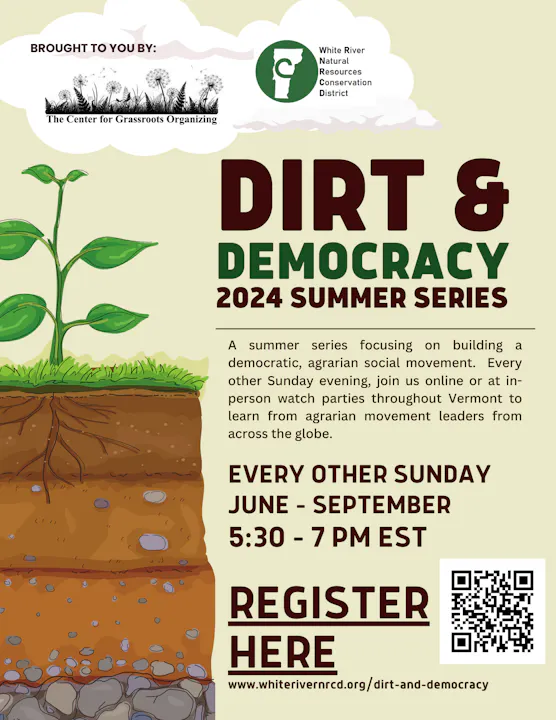
- 6:30–8 PM: Dinner and Dirt and Democracy discussion
- 8:30 PM: Drop-off at Vermont Law and Graduate School
- 9 PM: Drop-off at VTSU–Randolph

2 Farm Force Bootcamps Available Per Year:
Sept/Oct in Vermont
Feb/March in US Virgin Islands
Upcoming In-Person Training Offerings:
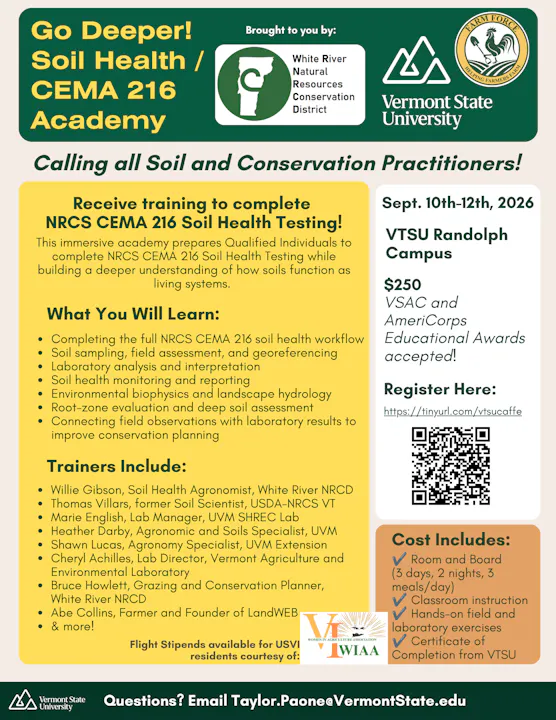
1. Soil Health / CEMA 216 Academy
- Sept 10-12, 2026 - Randolph, VT
- $250 includes room & board
- REGISTER HERE
2. Small-Scale Agricultural Engineering Bootcamp
- February 2027 - St. Croix, USVI
- Details TBD
Farm Force Bootcamps are intensive, hands-on trainings. Bootcamps combine whole-farm planning, agroecology, and “lite” agricultural engineering for small-scale and regenerative practices.
Sign up to stay informed about future Bootcamps opportunities HERE.

Learn more about the History of Farm Force:
Brought to you by: